Customer expectations have never been higher. People want fast answers, personalized journeys, and consistent support across every channel. At the same time, teams are under pressure to do more with less. That is exactly where CX automation becomes a game changer, harnessing the power of AI for omnichannel customer support to streamline operations. By improving customer engagement with Contact Center AI, businesses can provide faster, more personalized experiences while keeping teams efficient and focused.
Instead of relying on manual processes and scattered tools, CX automation orchestrates customer interactions end to end. It connects data, channels, and workflows so you can deliver seamless, relevant, and scalable experiences without burning out your team.
This guide walks through what CX automation is, why it matters, what it can do for your business, and how to get started in a practical, results-driven way.
Modern customer support goes far beyond handling tickets. Leveraging advanced computing for faster processing of customer data allows teams to handle high volumes of interactions without slowing down operations. This approach ensures agents can focus on meaningful engagement rather than repetitive tasks.
Many organizations are now implementing supercomputing solutions to boost AI capabilities, which helps predict customer needs and optimize response times. By analyzing patterns in real time, businesses can deliver proactive support and maintain a seamless customer journey across all channels.
Marketing and customer service alignment is also critical. Using strategies to enhance customer engagement with automation tools ensures that every touchpoint resonates with users and drives loyalty. Insights gained here help shape interactions that are both relevant and timely.
Scaling operations becomes more manageable with methods for integrating AI into omnichannel workflows. These approaches allow teams to coordinate marketing, sales, and support efficiently, making every customer interaction smoother and more effective.
Financial planning is another key factor. Leveraging resources for improving ROI in customer support automation helps companies invest wisely in tools that enhance operational efficiency while meeting growing customer expectations. This strategic approach ensures long-term value from every automation initiative.
By combining CX automation with intelligent insights, predictive analytics, and workflow optimization, businesses can create a customer experience that is not only fast but also personalized and proactive. Automation isn’t just about efficiency—it’s about delivering meaningful interactions that keep customers coming back.
Top 10 Contact Center Solutions for CX Automation
Efficient contact center solutions are essential for businesses looking to improve customer engagement, reduce response times, and streamline workflows. With CX automation becoming a game-changer, choosing the right platform can transform the way your support teams operate. Here’s a breakdown of the top solutions available today.
1. Bright Pattern – AI-Powered Contact Center Solutions
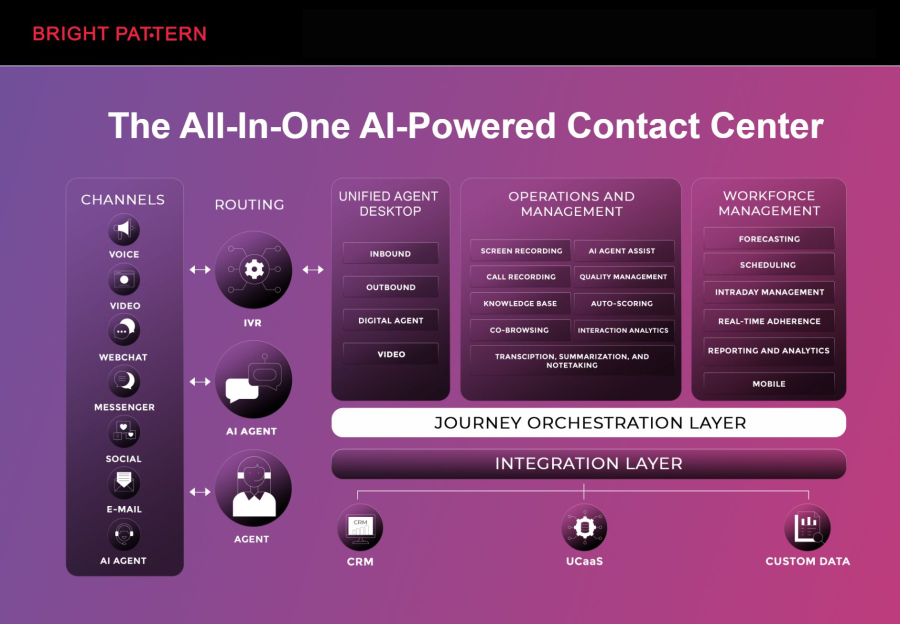
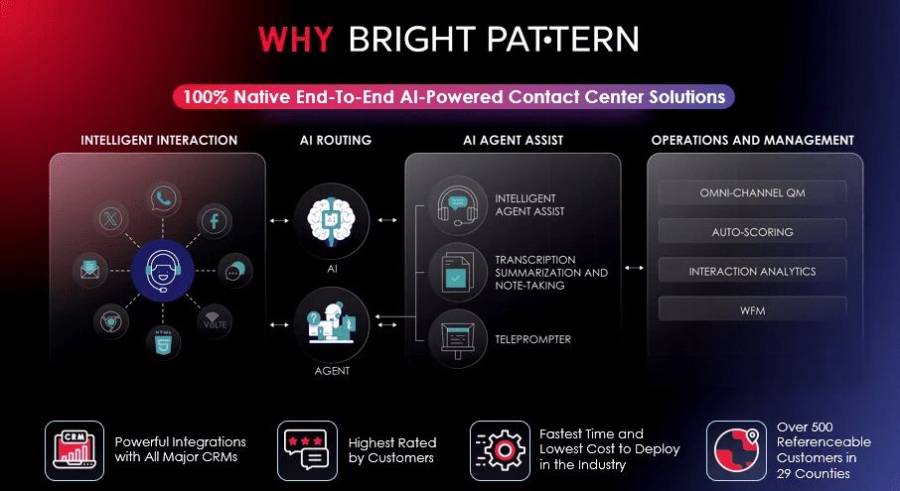
Bright Pattern leads the industry in AI-driven CX automation. Its platform helps organizations orchestrate customer interactions across voice, chat, email, SMS, and social media, providing a seamless omnichannel experience. With integrated AI tools, support teams can prioritize inquiries, predict customer needs, and deliver personalized assistance.
Key features:
- Omnichannel routing that intelligently directs customer interactions to the right agent.
- AI-powered chatbots and virtual assistants for 24/7 support.
- Real-time analytics to monitor performance and improve agent productivity.
- Integration with CRM and business tools to centralize customer data.
- Workflow automation to reduce manual tasks and improve response efficiency.
Bright Pattern’s approach to CX automation ensures that customer interactions are not just faster but also more meaningful, helping businesses build stronger relationships and higher satisfaction rates.
2. Five9 – Cloud Contact Center Platform
Five9 offers a cloud-based contact center solution that leverages AI to improve agent efficiency and customer experience. Its tools include predictive dialing, automated workflows, and real-time reporting for better decision-making.
3. Genesys Cloud CX – Unified Customer Experience Platform
Genesys Cloud CX provides a fully integrated platform for omnichannel engagement. Its AI features help predict customer behavior, optimize agent performance, and deliver seamless experiences across channels.
4. NICE CXone – Customer Experience Optimization
NICE CXone is a comprehensive contact center platform with AI-powered analytics, workforce optimization, and routing capabilities. It helps businesses improve customer engagement and operational efficiency.
5. Talkdesk – Intelligent Cloud Contact Center
Talkdesk uses AI to streamline workflows, enhance call routing, and provide actionable insights. Its CX automation features focus on boosting agent performance and reducing handling times.
6. RingCentral Contact Center – Flexible Cloud Solution
RingCentral offers a cloud-based contact center solution with AI-powered analytics and omnichannel support. It enables teams to deliver consistent and efficient customer service while scaling easily.
7. 8x8 Contact Center – Integrated Communications Platform
8x8 combines voice, chat, and social messaging with AI tools for better customer insights. Its platform allows for automation of repetitive tasks and improved agent productivity.
8. Vonage Contact Center – AI-Enhanced Customer Support
Vonage leverages AI to provide smart routing, real-time monitoring, and enhanced self-service options. It helps organizations improve response times and customer satisfaction.
9. Cisco Contact Center – Enterprise-Grade Solution
Cisco Contact Center delivers enterprise-level contact center services with AI-driven analytics, omnichannel engagement, and workforce management tools to enhance CX automation.
10. Aspect Via – Customer Experience Management
Aspect Via provides a cloud-based platform with predictive analytics, AI-enabled routing, and workflow automation. It helps organizations deliver consistent and personalized support experiences
What Is CX Automation?
CX automation(customer experience automation) is the use of technology to design, execute, and optimize customer journeys with minimal manual intervention. It combines data, rules, and AI powered capabilities to automatically:
- Respond to customer inquiries across channels
- Trigger personalized messages and offers based on behavior
- Route conversations to the right agent or team
- Collect feedback and act on it in real time
- Surface insights that help teams continually improve the experience
Instead of treating customer support, marketing, and operations as separate functions, CX automation connects them into a single, coordinated system. Customers get quicker, more relevant interactions, while teams gain visibility and control over the entire journey.
Why CX Automation Matters Now
Customer experience has become a key competitive advantage. Businesses that respond quickly, personalize effectively, and keep interactions effortless are the ones that win loyalty and repeat revenue. CX automation helps you deliver that level of service consistently, even as you scale.
Key reasons CX automation is rising in importance
- Rising customer expectations– Customers are used to on demand services and instant responses. Slow or disjointed experiences stand out in a negative way.
- Channel explosion– Email, chat, social, messaging apps, phone, and self service portals all need to work together. Manual coordination simply does not scale.
- Pressure on margins– Teams must deliver more value without continually adding headcount. Automation helps unlock that efficiency.
- Data abundance– Businesses capture more data than ever, but it is only valuable if you use it. CX automation turns that data into timely, relevant actions.
- AI maturity– Advances in AI and natural language understanding enable automation that feels more human and helpful than ever before.
Core Components of CX Automation
While every organization deploys CX automation differently, most successful approaches share several core components. When these elements work together, they create a powerful, end to end experience engine.
1. Unified Customer Data
Automation is only as smart as the data behind it. A strong CX automation foundation begins with aunified view of the customerthat brings together:
- Contact details and preferences
- Purchase and billing history
- Support tickets and interaction logs
- Product usage or in app behavior
- Marketing engagement data, such as opens and clicks
When your automation platform can see the full history and current context, it can trigger the right message, route, or action at exactly the right moment.
2. Journey Orchestration
Journey orchestration turns individual touchpoints into a coherent flow. Instead of reacting to one off events, you designend to end journeysthat account for multiple steps and channels.
Common automated journeys include:
- Onboarding– Welcoming new customers, guiding setup, and checking in at key milestones.
- Renewal and expansion– Notifying customers ahead of renewals, suggesting plan upgrades, and removing friction in the buying process.
- Reactivation– Identifying at risk customers or inactive users and nudging them with relevant content or offers.
- Support follow up– Automatically following up after a ticket closes to gather feedback or offer additional help.
Journey orchestration ensures that customers always know what comes next and feel guided rather than left to figure things out alone.
3. Intelligent Routing and Workflows
Behind the scenes, CX automation relies onrules and workflowsto move information and tasks to the right place. Instead of manual triage, you can automatically:
- Route conversations based on topic, language, or account value
- Escalate urgent issues to senior agents or specialist teams
- Notify account managers when high value customers open support tickets
- Create tasks for follow up when certain conditions are met
These workflows keep your operation responsive and organized, even during peak demand.
4. AI Assistants and Self Service
AI driven assistants, such as chatbots or virtual agents, are a visible and highly impactful part of CX automation. They help customers help themselves while keeping agents focused on more complex and high value interactions.
Effective AI powered self service can:
- Answer common questions instantly, 24 / 7
- Guide customers through simple processes, such as password resets or order tracking
- Capture key details before handing off to a human agent
- Offer personalized recommendations based on past behavior
When designed thoughtfully, AI assistants enhance the experience rather than feeling like a barrier. They provide speed and convenience, with a clear path to human support whenever needed.
5. Proactive Communication
Instead of waiting for customers to reach out with issues, CX automation empowers you to beproactive. You can anticipate needs and communicate before problems turn into frustration.
Examples of proactive automation include:
- Sending alerts when service status changes or maintenance is planned
- Notifying customers about shipping delays with revised timelines
- Reaching out when usage patterns suggest confusion or risk of churn
- Sharing educational tips when customers adopt a new feature
Proactive communication builds trust and reduces inbound inquiries by keeping customers informed and confident.
6. Feedback and Continuous Improvement
Strong CX automation does not end with a single interaction. It closes the loop bycapturing feedbackand using it to iterate.
This often includes:
- Automated post interaction surveys, such as CSAT or NPS
- Text analysis of open ended feedback to identify themes
- Triggering follow up workflows when a customer leaves a low score
- Dashboards that reveal trends and improvement opportunities
Over time, your automated journeys become more refined and impactful as you learn from every touchpoint.
Business Benefits of CX Automation
When implemented thoughtfully, CX automation delivers benefits across the organization, from front line support to the executive team.
1. Faster Responses and Resolution Times
Automation eliminates the lag associated with manual queue management and routing. Customers get:
- Immediate answers to common questions via AI assistants
- Faster connection to the right agent when human help is required
- Automated updates and notifications without needing to ask
Faster response and resolution times directly improve satisfaction and reduce the frustration that comes from waiting.
2. Consistent, High Quality Experiences
Humans are great at empathy, creativity, and complex problem solving. They are less consistent at repetitive tasks. CX automation ensures that:
- Critical steps in a journey are never skipped
- Customers receive aligned messages across channels
- Policies and processes are applied fairly and consistently
This consistency reinforces your brand and gives customers confidence that they can rely on you.
3. Scalable Personalization
Personalization used to mean manually tailoring messages or offers. With CX automation, you can deliverindividualized experiences at scale.
Examples include:
- Triggering different onboarding flows based on role, industry, or product plan
- Recommending content or features based on previous usage
- Adjusting message frequency according to engagement patterns
- Personalizing retention offers based on customer value and tenure
The result is a customer journey that feels tailored and thoughtful, even across thousands or millions of customers.
4. Increased Team Productivity
Automation handles repetitive, low complexity tasks so your team can focus on meaningful work. This shift leads to:
- Higher capacity without proportional headcount increases
- More time for agents to handle complex cases and build relationships
- Reduced burnout from constant multitasking and manual admin
- Better collaboration across departments through shared workflows and visibility
When teams can concentrate on high impact activities, both performance and morale improve.
5. Lower Operational Costs
By increasing efficiency and enabling self service, CX automation often reduces the overall cost to serve each customer. Savings typically come from:
- Deflecting simple inquiries from high cost channels like phone support
- Reducing handle time with pre collected context and automated wrap up tasks
- Preventing issues before they generate support volume
- Streamlining internal handoffs and approvals
These cost savings can be reinvested into strategic CX initiatives, product innovation, or further automation improvements.
6. Better Decision Making Through Data
Because CX automation runs on data, it naturally generatesrich, actionable insights. You gain clarity on:
- Which journeys drive the highest satisfaction and retention
- Where customers tend to drop off or need extra help
- Which channels perform best for different types of interactions
- How operational changes affect customer outcomes
These insights support confident decisions about where to invest time, budget, and attention.
CX Automation Use Cases Across the Customer Lifecycle
CX automation shines when it is woven throughout the entire customer lifecycle. Below are practical use cases that illustrate how automation elevates every stage, from first touch to long term loyalty.
1. Awareness and Consideration
During early research, prospects want clarity and reassurance. CX automation can:
- Automatically answer common pre sales questions via chat or messaging
- Trigger educational content or product tours based on site behavior
- Route high intent visitors directly to sales or live support
- Capture key details for smooth handoffs between marketing and sales
This reduces friction and builds trust from the very first interaction.
2. Onboarding and Activation
Onboarding is one of the most influential stages of the customer journey. Automation helps you design a smooth, supportive experience that leads to fast time to value.
Examples of automated onboarding include:
- Welcome sequences tailored to customer type or plan
- In app tips and guided tours triggered by first login
- Automated reminders to complete critical setup steps
- Check ins at key usage milestones to celebrate progress or offer help
Effective automated onboarding reduces early churn and sets the tone for a long, successful relationship.
3. Day to Day Support and Service
Ongoing support is where CX automation delivers especially visible value. It can:
- Use AI assistants to answer FAQs and resolve simple requests instantly
- Automatically triage and route tickets to the best suited agents
- Surface relevant knowledge base articles for agents and customers alike
- Trigger follow up communications when certain issues are resolved
Customers enjoy faster, smoother resolutions, while teams gain control and clarity over volume and workloads.
4. Retention, Loyalty, and Expansion
Retaining and growing existing customers is typically far more cost effective than acquiring new ones. CX automation supports this by:
- Monitoring engagement patterns to spot early signs of churn risk
- Triggering personalized win back or check in campaigns
- Identifying upsell or cross sell opportunities based on product usage
- Automatically inviting advocates to leave reviews or join referral programs
These proactive, data driven actions help you protect and expand your most valuable relationships.
5. Feedback, Advocacy, and Continuous Improvement
Finally, CX automation closes the loop by aligning your organization around the voice of the customer. It enables you to:
- Trigger surveys after support interactions, purchases, or key milestones
- Automatically thank customers for feedback and share next steps
- Route detractor feedback to specialized care teams for follow up
- Invite highly satisfied customers to participate in case studies or reference programs
This creates a virtuous cycle in which customer voices directly shape improvements and innovations.
Example: How CX Automation Transforms Key Metrics
Companies that adopt CX automation often see tangible improvements in both customer experience and operational performance. While specific results vary by organization, the table below summarizes common areas of impact.
|
Metric |
Manual Approach |
With CX Automation |
|
First response time |
Minutes to hours, depending on volume and staffing |
Seconds to minutes, with AI assistants and automated routing |
|
Resolution time |
Extended by misrouting and missing context |
Shortened through intelligent routing and pre collected data |
|
Self service rate |
Limited, static FAQs and basic portals |
Dynamic, conversational self service available 24 / 7 |
|
Agent workload |
High manual admin, repetitive tasks |
Focus on complex issues and relationship building |
|
Customer satisfaction |
Inconsistent experiences and slower responses |
More consistent, faster, and personalized interactions |
Design Principles for Successful CX Automation
To unlock the full value of CX automation, it is important to design with the customer at the center. The following principles help ensure your initiatives delight customers and empower teams.
1. Start With High Impact Journeys
Rather than trying to automate everything at once, focus on a few journeys that matter most to customers and to the business. Common starting points include:
- New customer onboarding
- Top three support request types
- Renewal and account expansion flows
- Key proactive notifications, such as delivery or service updates
By concentrating on high impact journeys, you build momentum, generate quick wins, and gather valuable learnings for future phases.
2. Keep Human Handoffs Clear and Effortless
Automation works best when it complements human expertise. Design your flows so that:
- Customers always have a clear way to reach human support when they need it
- AI assistants gracefully hand off conversations, passing full context to agents
- Agents can easily override automated actions when necessary
This balance ensures that customers enjoy the speed of automation and the empathy of human support without feeling stuck in one or the other.
3. Personalize With Purpose
Effective personalization feels helpful, not intrusive. Use data to make experiences more relevant, and be transparent about how you use it. Practical ways to personalize include:
- Referring to known preferences, such as language or communication channel
- Tailoring next best actions based on recent behavior
- Adjusting messages to match customer lifecycle stage
Always aim to answer the question:How does this personalization make the experience better for the customer?
4. Make Feedback Central to Your Approach
Because CX automation touches so many interactions, it is important to continuously refine it. Build feedback into your processes by:
- Reviewing customer comments related to automated flows
- Gathering internal feedback from agents and frontline teams
- Running A / B tests on key messages and journeys
- Regularly reviewing metrics to identify new optimization opportunities
This creates a culture of ongoing improvement where automation grows more effective and customer centric over time.
5. Design for Transparency and Trust
Customers respond positively when they understand what is happening and why. In your CX automation, consider:
- Clearly indicating when customers are interacting with an AI assistant
- Explaining how long certain processes or responses are likely to take
- Providing simple controls for preferences, such as message frequency
Transparency builds trust and helps customers feel in control of their experience, even when much of it is automated behind the scenes.
Practical Steps to Get Started With CX Automation
Transitioning to a highly automated customer experience does not have to be overwhelming. You can move step by step while delivering value at each stage.
Step 1: Map Your Current Customer Journeys
Begin by mapping your existing journeys from the customer perspective. Capture:
- Key touchpoints across channels
- Typical questions, needs, and emotions at each step
- Where handoffs occur between teams or systems
- Pain points that customers and employees currently experience
This map becomes your guide for where automation can bring the most immediate benefit.
Step 2: Identify High Value Automation Opportunities
For each journey, look for tasks that are:
- Repetitive and time consuming
- Rule based and predictable
- Frequently delayed due to manual steps
- Prone to inconsistency or human error
These are prime candidates for automation. Prioritize them based on expected impact on customer satisfaction and internal efficiency.
Step 3: Establish Data Foundations
Next, ensure you have the data needed to power smart automation. Work toward:
- A single, unified view of customers across systems
- Clear definitions of key events, such as signups, purchases, and renewals
- Consistent identifiers so data can be connected across channels
Strong data foundations unlock more advanced automation such as behavioral triggers and predictive routing.
Step 4: Design, Test, and Iterate Key Flows
With priorities and data in place, design your first automated flows. For each flow:
- Define the trigger that starts the journey
- Outline each step, including messages, decisions, and handoffs
- Set clear success metrics, such as reduced response times or increased activation
- Test with a subset of customers before full rollout
Use feedback and data from early tests to refine and improve.
Step 5: Expand and Connect Automations Over Time
Once your initial flows are delivering value, expand your automation footprint by:
- Adding new journeys, such as retention or reactivation campaigns
- Connecting separate flows into holistic lifecycle experiences
- Introducing more advanced capabilities, such as predictive models or segmentation
This gradual expansion lets you scale with confidence, while maintaining a strong focus on customer outcomes.
The Strategic Opportunity of CX Automation
CX automation is more than a way to handle higher volumes or reduce operational load. Done well, it becomes a strategic differentiator that:
- Delivers experiences that feel tailored, timely, and effortless
- Empowers employees to do their best work, supported by smart tools
- Provides leadership with clear visibility into the customer journey
- Creates a strong foundation for innovation as customer needs evolve
By combining automation, data, and human expertise, organizations can consistently exceed customer expectations while operating with greater agility and efficiency.
Conclusion: Turning CX Automation Into a Competitive Edge
Customer experience is now central to business success, and CX automation is one of the most powerful levers available to elevate it. By unifying data, orchestrating journeys, and pairing AI powered automation with human empathy, you can:
- Respond faster and more accurately across every channel
- Deliver deeply personalized experiences at scale
- Empower teams to focus on high value, relationship driven work
- Unlock insights that guide smarter strat
